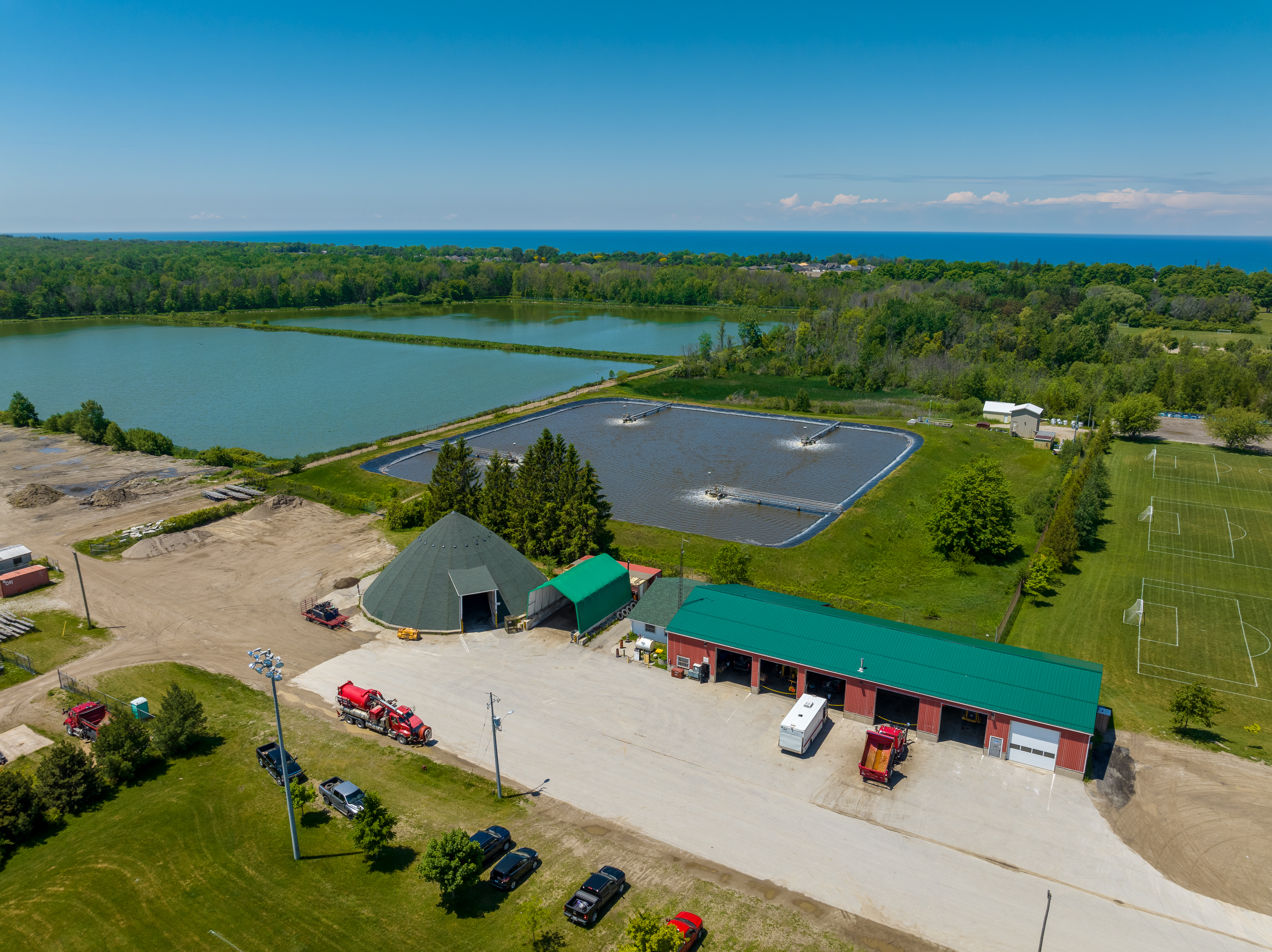
Lagoon Sludge Removal Project

Project Overview

The Municipality of Kincardine is undertaking a multi-year Lagoon Sludge Removal Project to restore treatment capacity and improve the long-term performance of the Kincardine wastewater lagoon system.

Over many years of operation, naturally occurring solids (known as sludge) have accumulated at the bottom of the lagoon cells. This is a normal part of wastewater treatment processes. However, as volumes increase over time, they can reduce available treatment capacity and impact system performance.

This project involves the gradual removal of accumulated sludge using specialized equipment and contractor support. Work is completed in phases over multiple years to safely manage the scale of the system and maintain ongoing wastewater treatment operations.

Background

The Kincardine wastewater lagoon system was constructed in the 1960s and continues to serve as the Municipality’s primary wastewater treatment facility.

In 2024, a detailed engineering assessment identified significant sludge accumulation within the lagoon cells. In response, the Municipality began a long-term removal program in 2025 in partnership with Bishop Water Technologies to begin restoring lagoon capacity.

Because sludge builds up gradually over decades, removal is a complex, multi-year process that must be completed in stages and under suitable seasonal conditions.

Why This Project Matters

This project is an important part of maintaining and improving the Municipality’s wastewater treatment system. Benefits include:

  • Restoring treatment capacity within the lagoon system
  • Supporting efficient, long-term system performance
  • Improving operational reliability during peak flow periods
  • Supporting environmental compliance and regulatory requirements
  • Enabling continued planning for future wastewater infrastructure needs

As sludge removal progresses, temporary changes in lagoon conditions may occur, including increased biological activity and associated odours, particularly during warm weather. These conditions are expected and monitored as part of normal operations during active work.

System Overview

The Kincardine lagoon system consists of multiple treatment cells that work together to treat wastewater through natural biological processes, including aeration and settling.

Wastewater flows through the system in stages:

  • Inlet structures receive wastewater from the collection system
  • Aeration cells introduce oxygen to support biological treatment
  • Settling cells allow solids to separate from treated water
  • Treated effluent is discharged in accordance with environmental approvals

Timeline

The Lagoon Sludge Removal Project is a multi-year initiative planned to continue through 2028.

  • 2024 – Engineering assessment completed identifying sludge volumes
  • 2025 – Project initiation and first phase of sludge removal begins
  • 2025–2028 – Ongoing phased sludge removal and lagoon maintenance work
  • Each season – Work is scheduled during warmer months when conditions allow for safe and effective removal activities

Current work phases are typically scheduled for several weeks at a time and may vary depending on weather and operational conditions.

Frequently Asked Questions

The Municipality is currently undertaking a sludge removal project at the Kincardine wastewater lagoons. During this work, sludge that has accumulated over many decades is disturbed and removed from the lagoon system. This process can create strong and unpleasant odours, particularly during warm weather and certain wind conditions.

Warmer temperatures increase biological activity within the lagoon system. As organic material breaks down, gases can be released, which may result in noticeable odours. Wind direction, humidity, and atmospheric conditions can also influence how odours are experienced in nearby areas.

The Municipality takes public health and safety seriously and understands residents' concerns about these odours. While the odours are unpleasant, the Municipality has not identified any information to suggest they pose a risk to public safety. Staff use gas monitoring equipment as part of regular safety procedures, and no concerns have been identified.

As part of the sludge removal process, odours are released and can be carried by the wind, making them noticeable in surrounding areas which is why residents may notice them. While the odours can be unpleasant, outdoor air movement also helps disperse them and prevents gases from accumulating in one location.

The Municipality continues to monitor conditions, review resident concerns, and work with project partners throughout the sludge removal process. If any risk to public health or safety is identified, the Municipality will take appropriate action and communicate promptly with residents. Protecting the health and safety of residents remains a top priority.

Over time, sludge naturally builds up in wastewater lagoons and must be removed to maintain treatment capacity and system performance. Some lagoon cells have not had sludge removed for many years, and the accumulated material is now taking up a significant portion of the lagoon capacity.

Removing the sludge is necessary to improve the operation of the wastewater treatment system and support its long-term performance.

Yes. The Ministry is aware of the ongoing wastewater lagoon improvement work and the Municipality's efforts to restore the system and improve performance.

Residents who have concerns are always welcome to contact the local Ministry office directly.

Individual odour events are not required to be reported to the Ministry. However, the Municipality documents operational issues and includes required information in annual reports submitted to the Ministry.

Municipal staff and project partners are actively working to reduce odours where possible through operational adjustments, additional aeration, and the evaluation of other treatment options. Staff continue to monitor site conditions and work with engineers and contractors to identify opportunities for improvement.

The lagoon system was built in the 1960s, long before many of the surrounding residential neighbourhoods were developed.

The odour issues are also related to the accumulation of sludge over many decades. The current sludge removal project is addressing long-standing infrastructure and maintenance challenges that cannot be resolved overnight.

The sludge removal program is a significant, multi-year investment. Approximately $750,000 of work is being completed this year, with additional sludge removal projects planned over the next two years.

The Municipality is removing as much material as practical each year to restore lagoon capacity and improve system performance.

The Municipality is beginning long-range planning for the future of the Municipality of Kincardine's wastewater treatment system. Staff will be working with engineering consultants and Council to evaluate future treatment options, infrastructure needs, and long-term investments required to support the community as it grows.

The current sludge removal project is an important first step in restoring the existing system and improving compliance and performance.

Contact the Project Team

Mark O'Leary
Manager, Environmental Services
Municipality of Kincardine
moleary@kincardine.ca
519-396-4660 x 5


Contact Us

The Municipality of Kincardine
1475 Concession 5, R.R.
#5, Kincardine, ON N2Z 2X6
Phone: 519-396-3468
F.: 519-396-8288

Connect and subscribe

Discover how you can connect with us and stay up-to-date on activities, events, programs, and operations through our subscription services.